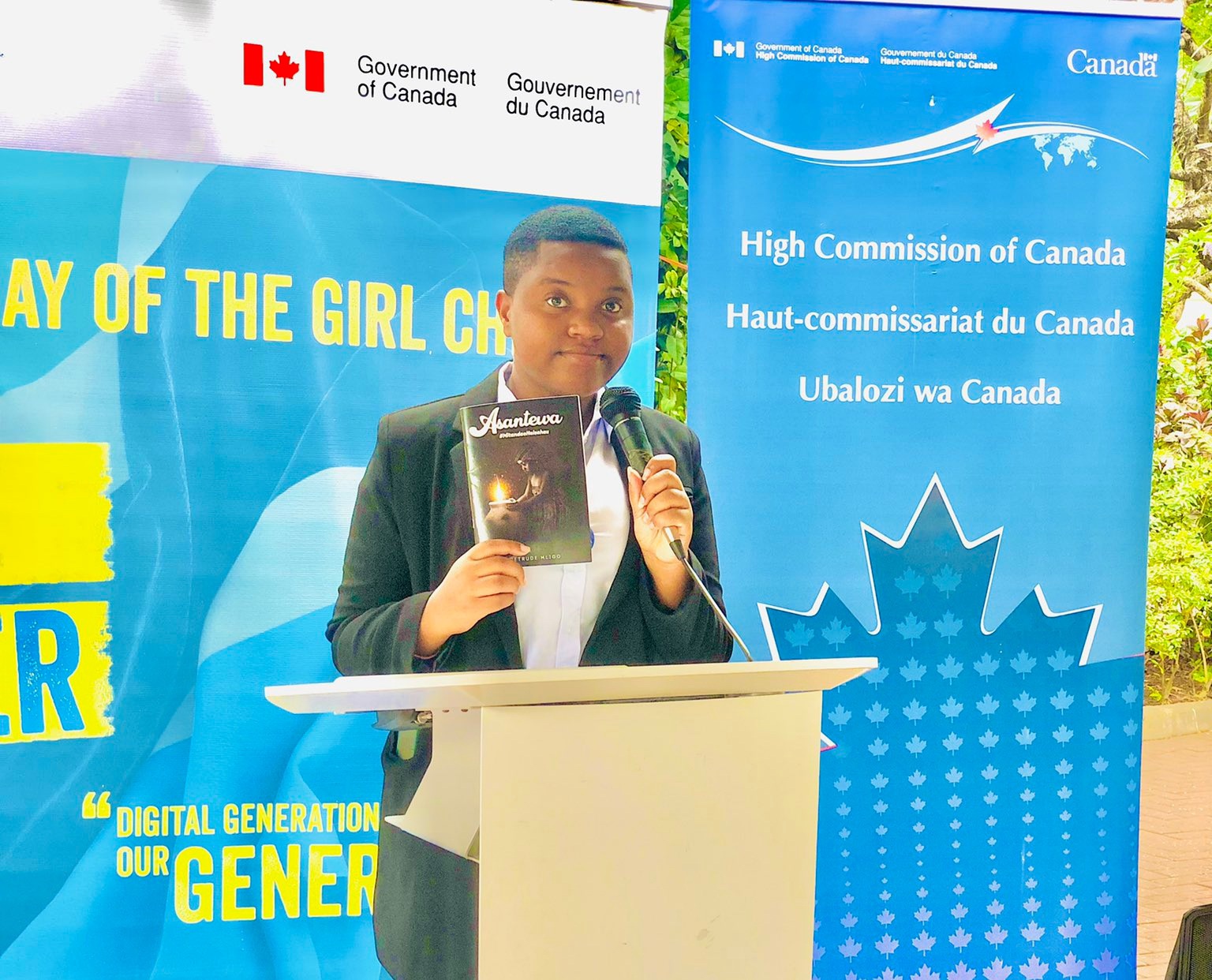
 @GetrudeMligo holding her new book, Asantewa
In today’s pervasive cyber culture, information spreads with speeds akin to that of light. The rise of the information age has opened unprecedented global opportunities and made people more connected in ways history never experienced. In light of the commemoration of the international day of the girl child, and with October being the global cyber security month- the place and role of girls in the digital space is something that needs to be unpacked and evaluated. The technological industry is predominantly male driven and is riddled with disparities such as the degree gap, gender pay gap, and the representation gap to name a few. In a report by PwC, they state that “Over a quarter of female students say they have been put off a career in technology as it’s too male dominated.” It is therefore imperative that these disparities are addressed as the world is becoming more and more digitised.
The infinite opportunities and developments borne from the digital age are intertwined with a plethora of social ills that have made it both a blessing and a curse. Some of the negative impacts of digitalisation that disproportionately affect women and girls include online gender-based violence and cyberbullying. These have proven to be stumbling blocks in enhancing active and effective digital participation of girls and women and children. Further to this, challenges such as affordability, accessibility, and digital safety in online spaces continue to widen the gender digital divide. In Africa, cultural beliefs and fears around technology also contribute to reduced interest and access to technology for girls. Digital spaces are viewed as a privilege reserved for certain age groups, which is why children are lagging behind. Consequently, this has led to an older generation’s dominance and a barrier to children’s engagement.
In Tanzania, one inspirational young author; our very own Getrude Joseph Mligo is arms deep in efforts to educate and inspire young people about digital literacy and cyber security. Getrude is a successful young leader from Tanzania with a degree in Human Resource Management from Mwalimu Nyerere University. She has been involved in writing literature, humanitarian work, and the girl power movement since she was 13 years old. She was a founding member of Nguvu Ya Mwanamke; an organization that breaks the cycle of poverty for marginalized young women of ages 15-to-24. She is also a founding member of Success Hands, an initiative that aims to increase quality education, fight gender-based violence and advocate for children’s rights. Furthermore, Getrude has written eight amazing books! She is currently one of the key trainers and programme leaders of Natokaje Kidigitali initiative, which educates young people on how to use digital spaces in a constructive and safe manner.
We recently sat down with Getrude Joseph Mligo, to learn more about her new book called Asantewa that has a running hashtag of #MitandaoHaisahau. Asantewa is a Swahili word, which represents the name of the leading character of the story. Getrude’s book touches on digital literacy and illiteracy, cyber safety, bulling, and opportunities presented by digital development. Here is what Getrude had to say:
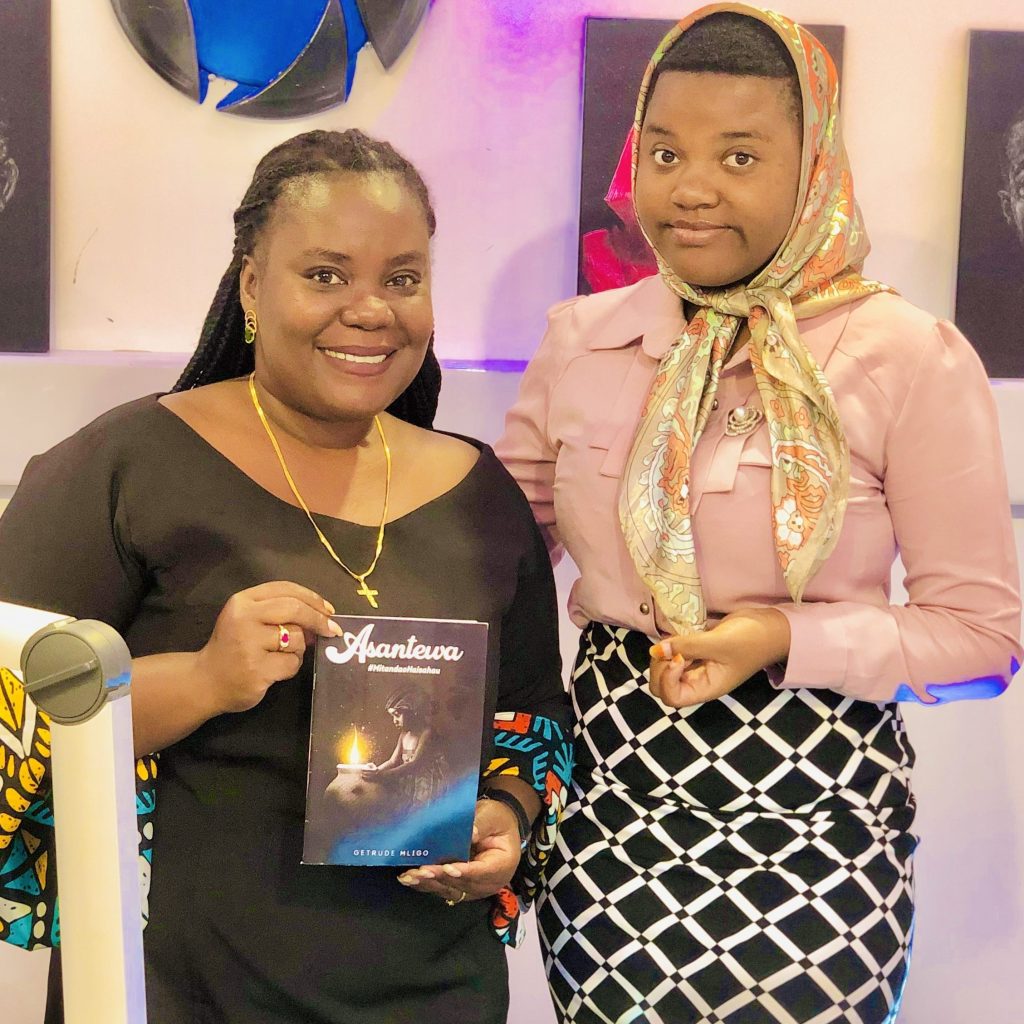 @GetrudeMligo
What inspired you to write this book about ASANTEWA with the hashtag #InternetNeverForgets or in Swahili #MitandaoHaisahau?
I was a victim, or to put it another way, I was unaware of the dangers of the internet. I was fortunate enough to have a digital device at a younger age, which allowed me immediate access to digital sites like Facebook and Instagram. I had no idea what to do with that phone, besides taking pictures. According to popular opinion at the time, in order to obtain a huge following, one had to be a bully or show nudity. In the end, I took somewhat a similar path and did what I thought was right, but it was not the best decision I had ever made. It was a big mistake. That encounter sparked my desire to write this book. I do not want anybody else to experience the same anguish and regret I suffered as a result of adopting wrong paths to gain followers. I hope that by telling my story in this book, other young ladies will be able to learn from my mistakes and avoid them in the future.
What do you aim to achieve with this book
This book seeks to raise awareness about using digital spaces safely, effective use of cyber spaces to attain digital economy, and acquiring personal development. It also aims to contribute to capacity building which will enable children to thrive while using the internet and digital technology.
What are some of the challenges you faced when writing your book?
For me, writing this book was incredibly poignant. When some of the tale is based on your own personal life, writing a book takes on a whole new meaning. Since I was plagued by regret for past mistakes, I found writing this book a difficult undertaking. My mistakes prompted me to reevaluate who I was, who I am now, and where I am headed, which I am grateful for.
Who are your intended audience, and why should they read your book?
My primary audiences for this book are young people between the age of 10 to 25 and secondary audiences such as governments, communities, and non-governmental organizations. I am hoping that the secondary audience will take up the task of disseminating the information contained in the book. We all want to put an end to bullying and sextortion, and this book does just that by addressing these issues and delivering the message.
How do you define cyberbullying?
I will give an example; when a 23-year-old girl like me, shares a picture on Instagram, accompanied with a constructive caption about a humanitarian cause, people will not pay attention to the message. Instead, they will say stuff like “you are too heavy for that skirt,” “you are too thin for that dress,” and a slew of other absurdities.
So, what does your book change?
My book informs on digital safety, illiteracy and opportunities. It does not guarantee that one will not be bullied in digital spaces, but it does provide information on how to deal with bullying. Furthermore, it serves as guide for girls who, like me, are still trying to figure out what to do with their digital platforms. Instead of being swept up in the standards of digital evil, it encourages them to use these platforms to seek out digital opportunities such as scholarships, workshops, and networking with the right people.
How would you feel if others were not ready to support the cause you are promoting?
That would be unfortunate, but the amazing thing about change is that it may happen at any time. I will be content if the book’s agenda has set seeds in people’s minds, and I will keep promoting it until people are ready to listen and read it.
What advice would you give to the younger generation?
My first piece of advice is to keep in mind that the Internet Never Forgets! Whatever you post, or share will remain online indefinitely. Even if you erase that photo from your phone, it may still be available to others. Do not share anything that could be misinterpreted or misused in order to cause you damage.
We would like to extend our gratitude to Success Hands and Getrude Joseph Mligo for offering her time and for giving insights into her new book. The book, Asantewa has now been published and for more information, Getrude is available on twitter and Instagram.
 Empowerment-Redefined