Whoever said travel broadens the mind was not far off the mark. I can attest to the accuracy of this statement. Having traveled to many different countries, I have gained a broad perspective on various things. Despite the wonders and beauties of my previous travels, the United Kingdom was always on my bucket list. Perhaps it was the architecture of the Harry Porter films that aroused my motivation, or the regal buildings depicted in countless evocative images of castles and palaces. It may have been the recollections of photos of my father’s time in the historic city of Cambridge. A young man in thin, bell-bottomed trousers, fresh as the blood coursing through his veins, standing behind lofty buildings while conjuring up a James Brown-esque look. Perfectly encapsulating the zeitgeist of the time to a tee. Whatever the reason may have been, I became an ardent Anglophile.
Long story short, when the time came, with a little hard effort, my first experience would come when gifted with the pursuit of higher education in the UK. I had reached the age of maturity. Traveling overseas was not as frightening because I had little experience traveling to other nations. It did not feel like I was on my way to the ocean’s abyss. I had already had my share of technological awes and embarrassments at airports and within countries, where everything worked differently. More digital than analog. However, since I am not tech adept, I would never be able to get over some things. Such as trembling fingers scanning my passports on large displays at airports or slick eyes looking for my flights. Aside from technological mishaps, there is a slew of other undesirable issues that do not seem to go away when traveling. It feels safer to maintain the status quo but traveling internationally always gives me the creeps because of the unknown. Some issues are self-inflicted, such as the awkwardness of large luggage at the airport which puts you into a humiliating promenade advertising how much you have brought. The searches through the check-ins, which always seem to attract the attention of passers-by on shorter internal flights. The strange sensation while on a flight that triggers my fear of heights, or the drying of lips and skin due to the overly conditioned air, the turbulence of flights, which always seem to plunge me into prayer. Each precipitous drop would elicit a new prayer each more desperate than the last. I would endure this same cycle of discomfort once again, to get to fair Albion.
Fast forward to the landing on British soil which was met with a huge plunge to the ground, bringing the plane to a screeching halt, so unsteady that I had to clutch my chair for dear life – at least, that is what I thought at the time. It was freezing, and I had no idea what to anticipate after I stepped off the plane. It appeared to be dreary, cloudy, and gloomy. Nostalgia began to seep in. I began to miss the blaze of the summer sun, which is always overhead in the cradle of mankind – or so history claims. Prior to that, I had already been assured that the weather in the UK is quite mild in comparison to places like Scandinavia, where I had spent the previous year. So, I had not brought my signature coat that I used to wear in the winter in Norway. All I had was a light raincoat, a jumper, and ordinary boots. Outside, I was flabbergasted by what I saw. It was bitterly cold. My skin formed a chilly rush, and my teeth chattered a symphony, as the cold penetrated to the bone. My fingers went numb for a time, and all I could hear was the gush of wind passing through my ears. I feared I had been fooled, or at the very least, the individual who gave me the account of this place had downplayed the intensity of the cold. The airport was full of busy passengers, chattering in a language that I could hardly recognize. For a brief minute, I wondered whether I was in another country because I was expecting to hear English. After all, this was in the United Kingdom, right? We often hear the light English tones in the movies, which are so refined that you can only imagine people dining at a table drinking tea with a cut-glass accent “more tea vicar?” but no this was a different, almost incomprehensible tongue. I went to the immigration line, where an officer was inspecting our passports. He was handsome, outfit sleek, with gestures to the point. I was greeted with a friendly smile before hearing him say something. “Je ne sais quoi,” or something such. I was going to tell him I couldn’t speak French when I heard something along the lines of “passrrpot”. Well, I assumed it was the passport he wanted, but then again he said something to which I asked him to re-iterate this time at a slower pace. Behold my folly, it was English! I began to realize that I had just experienced my first culture shock in Britain. Perhaps the dialect has something to do with the fact that this was Scotland. My first misconception had just been dispelled.
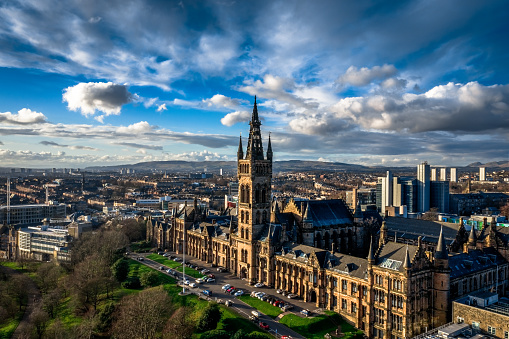
My impressions of Scotland were very different from what I had anticipated. I imagined the United Kingdom being homogeneous in terms of dialects, cultural practices, and the like. In fact, I now feel a little silly knowing now what I didn’t at the time, that the nation was made up of four countries: Northern Ireland, Scotland, Wales, and England. As dumbfounded as I was, I wondered how I could not think outside of the box. I reside in a country with comparable ties, yet mainland Tanzanians speak dialects that are significantly different from Zanzibarians. It is not uncommon for members of the United Nations to have different accents due to their ancestry. This thought went across my mind as I heard a voice whispering in my ear, “we are here.” I had arrived at the location where I would spend the rest of the semester. I had nodded off in the car that a friend had picked me up in. Everything else seemed to pace so fast after that and it almost felt as though I started the programme the minute I landed. By the evening, I had already met my supervisor, attended a mini-conference where postdocs, PhD students, and masters students pitched their projects, adding to my sense of intimidation and impressiveness all at the same time. Afterward, the chronicles of my bewilderment and struggles grew so extensive that I felt trapped by the shackles of being an imposter. A feeling I only thought haunted me but to my surprise, a lot of international students shared the same sentiment. My issues seemed to cut through belief systems, linguistic barriers, and cultural norms. I felt that I had to shift between my native self and what seemed closer or relatable to other people around me in order to be understood. For a long time, the concept of “faking it till you make it” was not unfamiliar to me. In fact, I was never startled when I noticed an African student faking a foreign accent. It hit me so hard that I knew most people were going through something similar. I would nod my head while they talked, not because I was following what they were saying, but to give them what seemed to be a gesture of encouragement. “Best of luck to that my brother, I feel your anguish.”, I would whisper in my head.
Despite having lived in Glasgow for nearly a year, Glasgow University remained a mystery to me. It was like a melting pot of people from all walks of life, and I would never be able to get used to it. Having grown up speaking Swahili, with the language profoundly ingrained in my system, I had to devise a mechanism to switch between English and Swahili when interacting. It was as if I was dealing with two ghosts, one of whom seems hell-bent on exposing me and the other protecting my honour. There were instances and spurts where I spoke Swahili to my supervisors and friends, before switching back to English in a light bulb moment. It was an uncontrollable and enraging reflex action, but that is how I eventually adapted. Other times my steely tongue from the brown rich soil of Kahama would show up while presenting with no place to hide the gaffe but a phoney smile, a technique that seemed to work at the time. Despite my pride in my ancestry, this was the first time I had to repress my pride. Such spells were marked by contrived faux coughs or a wave of hiccups to mask the discomfort, as my academics were on the line. However, one thing I learned from the Scots is that they are rather humble and hospitable compared to the rest of the UK – at least, that is what everyone agrees on. Coming from a tribe with comparable traits, the “Sukuma,” where we are known for our compassion and kindness, I had no trouble relating to them. As much as Scotland would be the ideal land of milk and honey, with friendly people, great education, nature has selected me out since I am not suited to the elements compared to the West Midlands.
Written by
~ Ruth Maganga
 Empowerment-Redefined